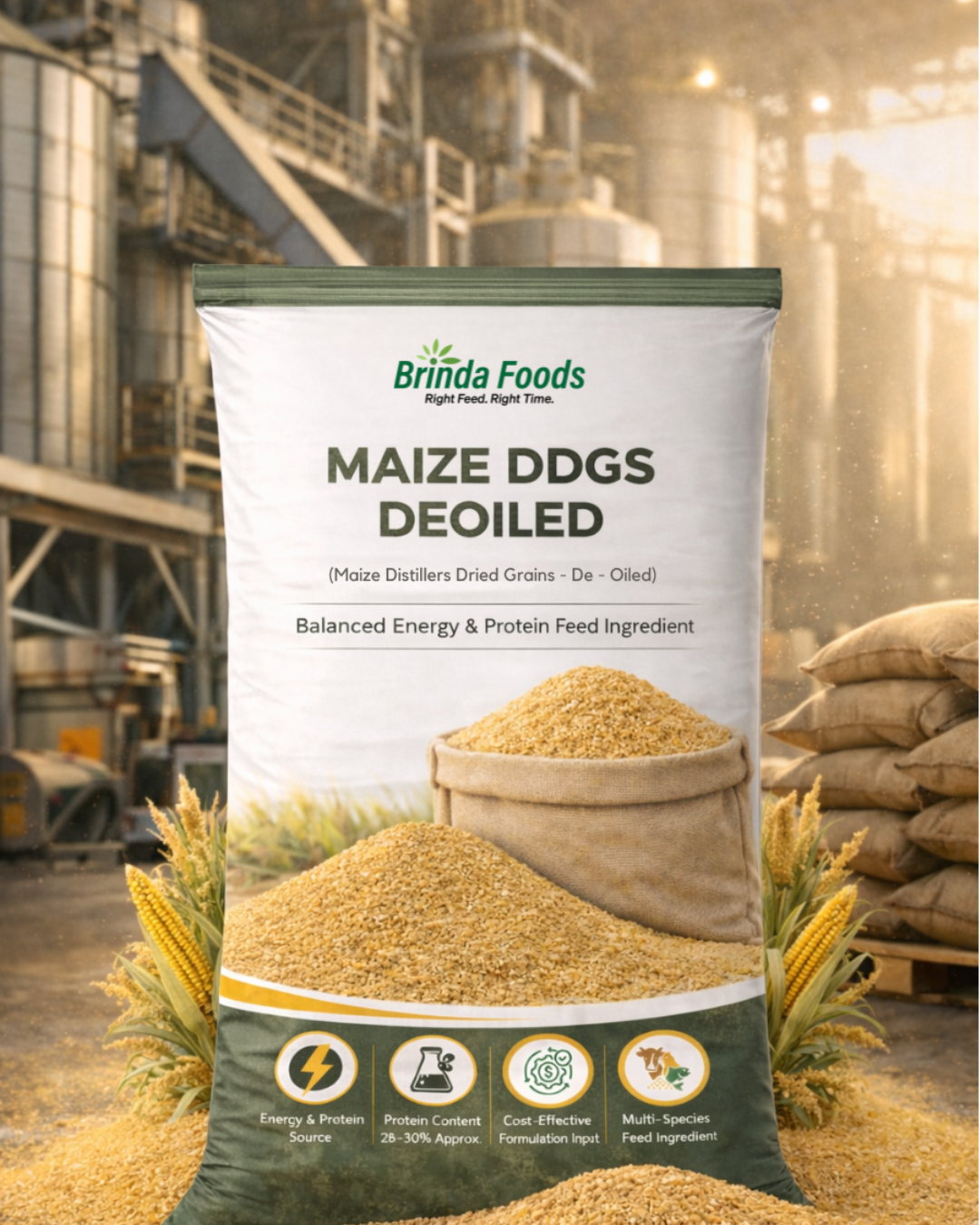
Maize DDGS For All Animals
Nutritional Needs!

Maize DDGS (Distillers' Dried Grains with Solubles) is a premium co-product of the ethanol industry – created during the fermentation of maize.

Once ethanol is extracted, the remaining nutrients are dried and processed into maize DDGS — a consistent, nutrient-dense raw material trusted by feed manufacturers across India and globally.

What makes it a reliable raw material?

  • Protein-rich— supports consistent feed formulation
  • Rich in fibre, fat & minerals — reduces dependence on multiple raw material sources
  • Stable nutritional profile — easier batch-to-batch quality control for manufacturers

Applications across feed segments:

  • Cattle — improves milk yield and muscle development
  • Poultry — supports growth performance and feed efficiency
  • Aqua — viable protein alternative in aquafeed formulations

Comparing Maize DDGS with traditional sources of protein!

Point of Difference Maize DDGS Traditional Protein sources
Affordability It is quite inexpensive in comparison to the traditional sources of protein like soy and other means. Quite expensive as compared to the Maize DDGS.
Protein Absorption and Digestion It is processed in advance, as it is separated while the maize is fermented. So it is easier on the gut health of animals and is absorbed properly so that it promotes muscle health and even milk production at ease. Hence, the result is that there are fewer digestive issues in animals. The traditional sources take more time and effort for digestion, which may cause acidity issues. There is a need for some other elements to absorb this protein accurately.
Overall performance It is a holistic measure for the animal's health, as it helps cattle in better milk production while staying healthy. This co-product is also a powerhouse of phosphorus, making it a perfect solution for animal feed. And even promote good muscle health in poultry and aquatic life. A good protein source, but it needs a variety of elements and effort to absorb. And you have to pay more here.

Associated Risks:

The product is made up of the standard parameters. But still, the farmers have to know the right amount of maize DDGS they can provide to their animal feed. The major dependency can cause other side effects. So it is better to decide on a particular quantity for maximum utilisation.

Specifications of Maize DCGS:

Maize DDGS is made with precision at Brinda Foods. It utilises the standard production procedures that are accredited globally. Here are the general specifications used in the product:

Parameter Specification
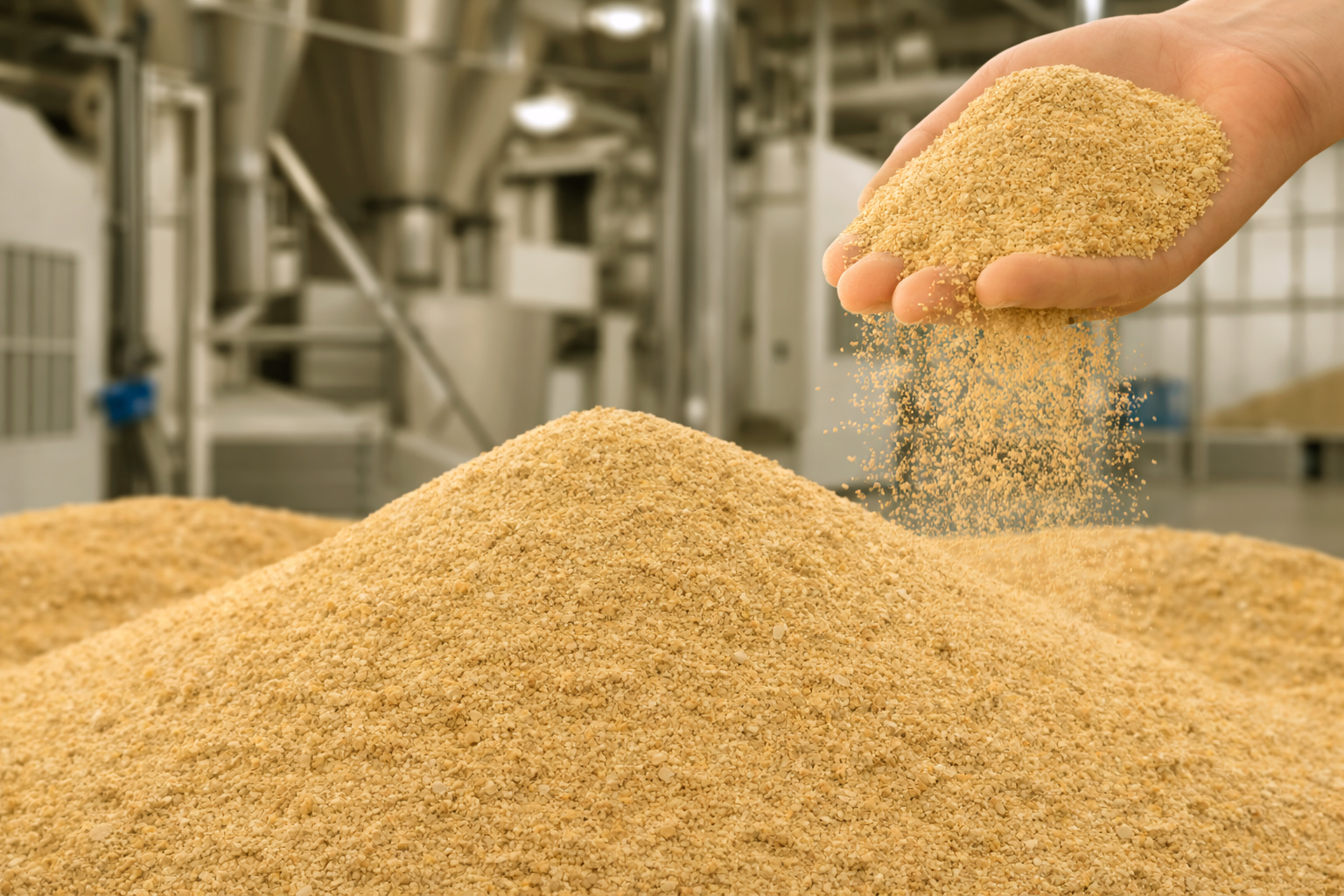
Appearance Golden yellow to brown granular meal
Crude Protein 28% – 32%
Crude Fat 8% – 12%
Crude Fiber 7% – 10%
Moisture Max 12%
Ash Max 6%
Acid-Insoluble Ash Max 0.5%
Total Digestible Nutrients (TDN) 75% – 85%
Metabolizable Energy 2500 – 3000 kcal/kg
Phosphorus 0.6% – 0.9%
Aflatoxin < 20 ppb
Salmonella Absent in 25g
Packaging 50 kg PP Bags / Bulk Packing
Shelf Life Up to 6 months under dry and hygienic storage.

Feed manufacturers and millers need a raw material that's consistent in quality, competitively priced, and reliably delivered. Maize DDGS ticks all three — when sourced right.

At Brinda Foods, we supply de-oiled Maize DDGS with verified lab reports, ensuring your formulations stay on spec every time.

Maize DDGS vs. Traditional Protein Sources

Choosing the right raw material isn't just about nutrition — it's about consistency, cost, and what works at scale. Here's how Maize DDGS stacks up.

 More Value Per Metric Ton

Traditional protein sources like soya come at a premium — and that cost adds up fast for feed manufacturers.

  • Maize DDGS delivers comparable protein at a significantly lower cost
  • Better margins on your formulations without compromising on nutritional output
  • A smart swap for millers looking to optimise raw material spend

 Faster Absorption, Less Gut Stress

The fermentation process does the heavy lifting before the feed even reaches the animal.

  • Pre-processed during maize fermentation — easier to digest
  • Better nutrient absorption = less waste in the feed cycle
  • Fewer digestive issues reported across cattle, poultry & aqua segments
  • Traditional sources often require additional additives to achieve the same absorption rate

Consistent All-Round Performance

This isn't a single-benefit ingredient — it works across multiple parameters.

  • Supports better milk yield in cattle
  • Promotes muscle development in poultry
  • Works as a reliable protein source in aquafeed
  • Naturally rich in phosphorus — reducing the need for additional supplementation
  • Traditional alternatives often need multiple supporting ingredients to match this output

One Thing to Keep in Mind

Maize DDGS performs best when used as part of a balanced formulation.

  • Over-reliance on any single raw material can affect overall feed quality
  • Work with your nutritionist to define the right inclusion rate for your specific feed category
  • Optimal quantities ensure maximum utilisation and avoid any imbalance in the final product

Nutrient specifications: 

  • Crude Protein — 26–32%
  • Crude Fat — 6–10% (lower in De-oiled DDGS)
  • Crude Fibre — 8–12%
  • Ash — 3–5%
  • Moisture — max 10%
  • Starch — very low (largely removed during fermentation)

Key Minerals

  • Phosphorus — min 0.3% (high bioavailability post-fermentation)
  • Calcium — min 0.5%
  • Ash — max 10%

Energy Values

  • TDN (Total Digestible Nutrients) — ~83%
  • NEL (Net Energy for Lactation) — ~1.92 Mcal/kg
  • NEm (Net Energy for Maintenance) — ~1.99 Mcal/kg

 Amino Acid Profile

  • Methionine — good levels, well digestible
  • Cysteine & Threonine — reliable across batches
  • Lysine — present but lower; supplementation recommended in poultry diets
  • Tryptophan — present in moderate amounts

Why De-oiled Maize DDGS Specifically?

De-oiled DDGS has reduced fat content, which means the following:

  • Better shelf life and storability
  • More stable inclusion in high-volume formulations
  • Easier to blend without affecting fat balance in the final feed
  • Preferred by poultry and aqua feed manufacturers for consistency

Maize DDGS is high in nutritional powers. It is a byproduct of ethanol production. Its formulation is the result of fermenting maize and drying the leftover solids. The implementation of the product is considered a raw material in cattle, poultry, and aquafeed formulations.

In the case of aqua life, it is limited to the marine animals like fish and shrimp, as the marine life is quite sensitive to high fats and proteins.

DDGS includes 26–32% crude protein; high energy; phosphorus; and essential amino acids individually. Such specifications support higher milk yield, stronger muscle growth, and overall cattle performance at cost-effective pricing.

The standard DDGS inclusion rate for DDGS stands at between 15 and 20% of the total diet on a dry matter basis. But one must always formulate according to the feed nutritionist to meet the specific requirements which are suitable for the animal.

Category Recommended Level
Lactating cows 10% – 20% of total dry matter
Early lactation (high producers) 12% – 18%
Dry cows 5% – 10%
Heifers 10% – 15%

Maize DDGS provides comparatively more protein with added fibre, fat, and phosphorus in general at 10–15% lower cost than soybean meal. And in some cases it can fully replace the feed depending on the inclusion target and the feed category.

Look for suppliers who offer consistent quality, verified lab reports, and trustworthy bulk delivery timelines. Brinda Foods supplies de-oiled Maize DDGS with complete quality documentation across North India and international markets.

Related Products

Maize DDGS

We are prime choice for Maize DDGS in India, beginning from physical characteristics.

Rice DDGS

Rice DDGS is a way to modernise livestock management as a byproduct of ethanol.

Soya DOC

Soya DOC (de-oiled cakes) is a nutrient-dense source for livestock and poultry feed.

Mustard DOC

At Brinda Foods, our Mustard DOC is the prime protein source for ruminants' health,

TOP