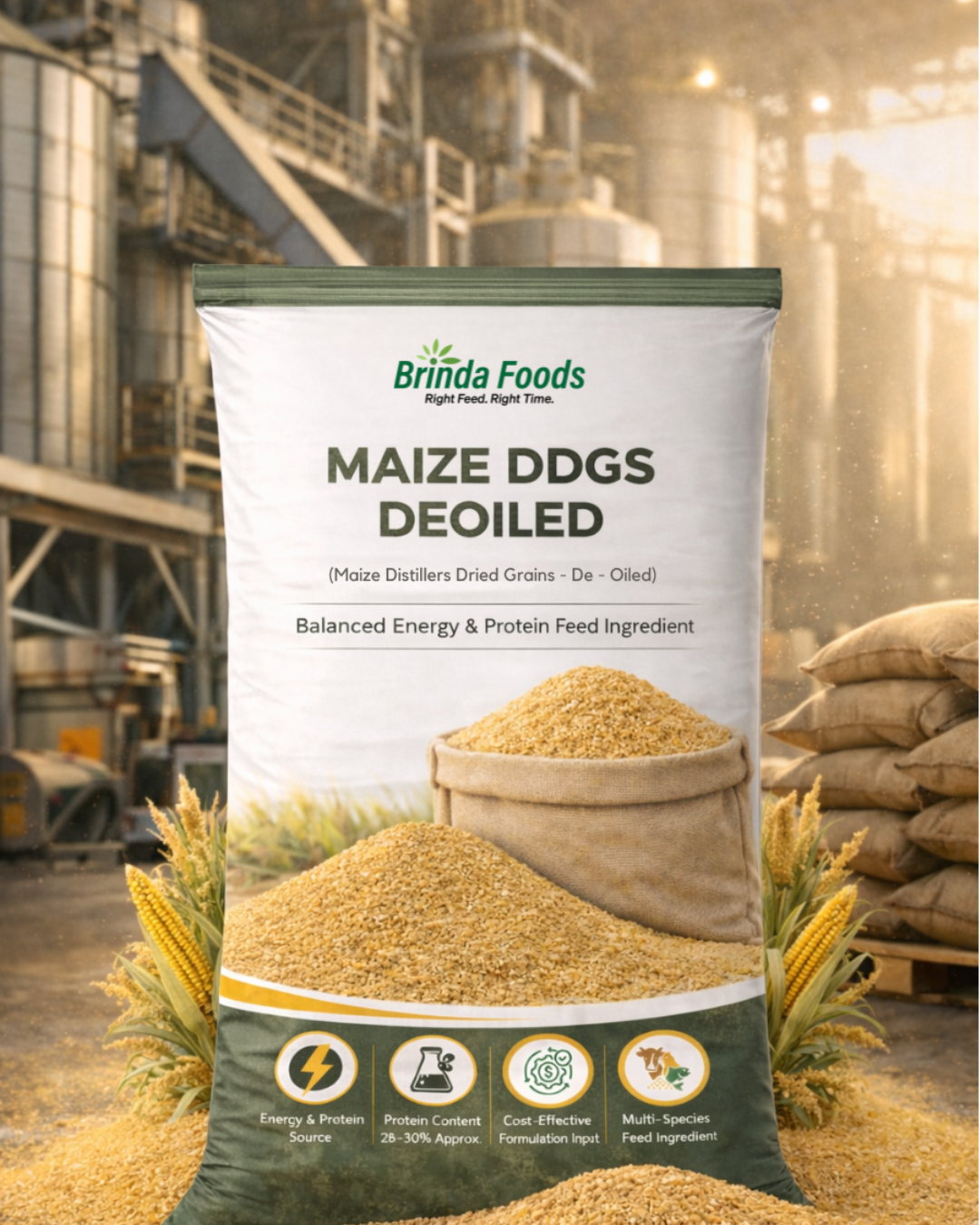
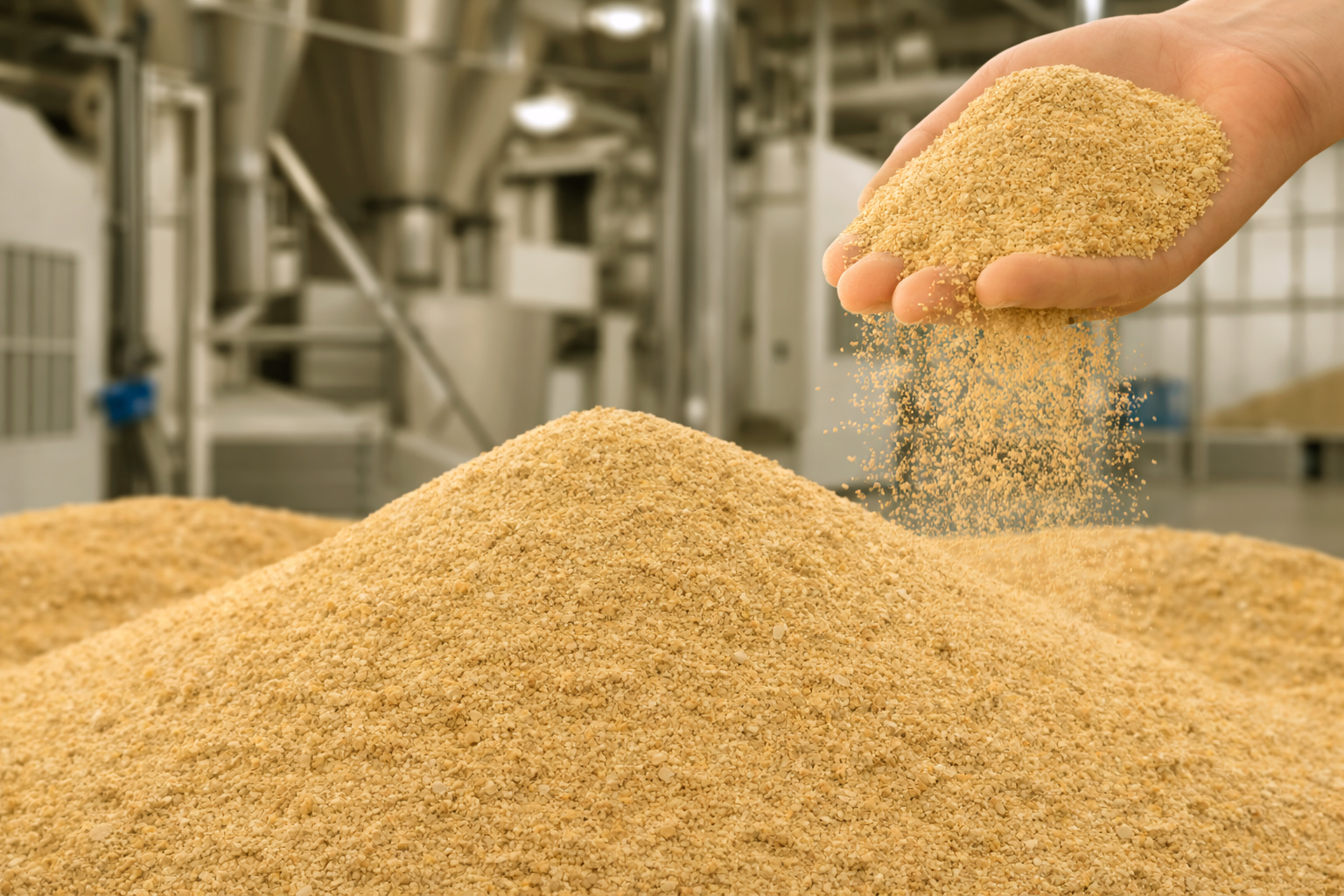
Feed manufacturers and millers need a raw material that's consistent in quality, competitively priced, and reliably delivered. Maize DDGS ticks all three — when sourced right.
At Brinda Foods, we supply de-oiled Maize DDGS with verified lab reports, ensuring your formulations stay on spec every time.
Maize DDGS vs. Traditional Protein Sources
Choosing the right raw material isn't just about nutrition — it's about consistency, cost, and what works at scale. Here's how Maize DDGS stacks up.
More Value Per Metric Ton
Traditional protein sources like soya come at a premium — and that cost adds up fast for feed manufacturers.
- Maize DDGS delivers comparable protein at a significantly lower cost
- Better margins on your formulations without compromising on nutritional output
- A smart swap for millers looking to optimise raw material spend
Faster Absorption, Less Gut Stress
The fermentation process does the heavy lifting before the feed even reaches the animal.
- Pre-processed during maize fermentation — easier to digest
- Better nutrient absorption = less waste in the feed cycle
- Fewer digestive issues reported across cattle, poultry & aqua segments
- Traditional sources often require additional additives to achieve the same absorption rate
Consistent All-Round Performance
This isn't a single-benefit ingredient — it works across multiple parameters.
- Supports better milk yield in cattle
- Promotes muscle development in poultry
- Works as a reliable protein source in aquafeed
- Naturally rich in phosphorus — reducing the need for additional supplementation
- Traditional alternatives often need multiple supporting ingredients to match this output
One Thing to Keep in Mind
Maize DDGS performs best when used as part of a balanced formulation.
- Over-reliance on any single raw material can affect overall feed quality
- Work with your nutritionist to define the right inclusion rate for your specific feed category
- Optimal quantities ensure maximum utilisation and avoid any imbalance in the final product
Nutrient specifications:
- Crude Protein — 26–32%
- Crude Fat — 6–10% (lower in De-oiled DDGS)
- Crude Fibre — 8–12%
- Ash — 3–5%
- Moisture — max 10%
- Starch — very low (largely removed during fermentation)
Key Minerals
- Phosphorus — min 0.3% (high bioavailability post-fermentation)
- Calcium — min 0.5%
- Ash — max 10%
Energy Values
- TDN (Total Digestible Nutrients) — ~83%
- NEL (Net Energy for Lactation) — ~1.92 Mcal/kg
- NEm (Net Energy for Maintenance) — ~1.99 Mcal/kg
Amino Acid Profile
- Methionine — good levels, well digestible
- Cysteine & Threonine — reliable across batches
- Lysine — present but lower; supplementation recommended in poultry diets
- Tryptophan — present in moderate amounts
Why De-oiled Maize DDGS Specifically?
De-oiled DDGS has reduced fat content, which means the following:
- Better shelf life and storability
- More stable inclusion in high-volume formulations
- Easier to blend without affecting fat balance in the final feed
- Preferred by poultry and aqua feed manufacturers for consistency