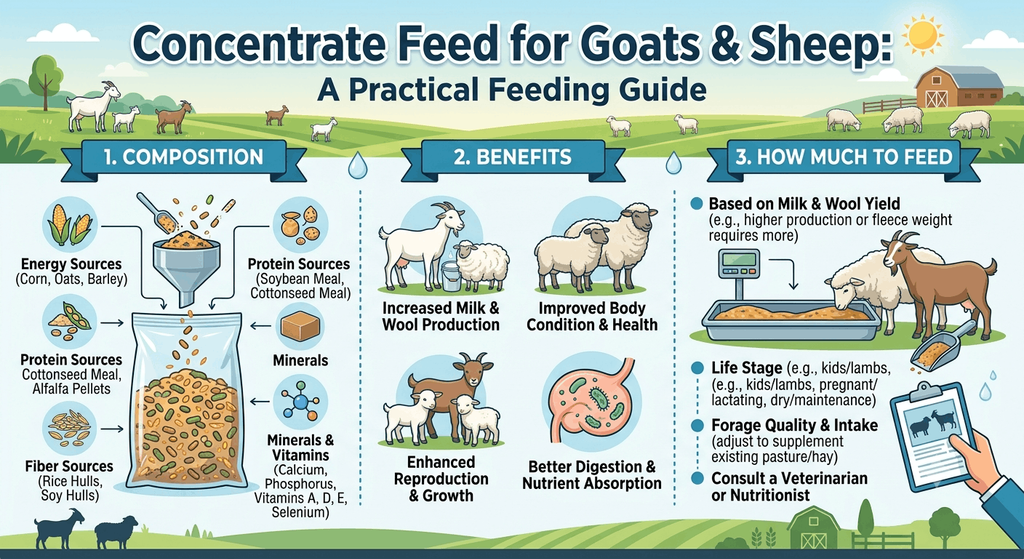
Quick answer: Concentrate feed for goats and sheep is the grain and oil meal portion of the diet, given along with green and dry fodder. Most mixes sold in India have 14% to 20% crude protein. A common base is maize for energy, Soya DOC or Mustard DOC for protein, and DORB or wheat bran for bulk. Mills that get consistent results usually have one thing in common: they are strict about raw material quality.
We get a lot of calls from feed mills these days asking one question. “Can we start a goat feed line?”
It makes sense. Goat and sheep farming has changed a lot in India. Farms with 200 or 300 stall fed animals are now normal in Rajasthan, UP and Maharashtra. These farmers don’t want to mix feed by hand anymore. They want a ready bag that gives the same result every month.
The trouble starts when a mill simply adjusts its cattle feed and sells it as goat feed. Goats and sheep have their own habits, and the feed needs to respect that.
How Goats and Sheep Are Different?
Have you ever watched a goat at a feed trough? It picks. It pushes the bran aside and hunts for the tastier bits.
Sheep are calmer eaters. They take what’s given, but they don’t like sudden changes.
A few more points your formulation team should keep in mind:
- Goats eat a lot for their size, roughly 3% to 5% of body weight in dry matter daily. So the feed has to be nutrient dense.
- Sheep need much less copper than cattle. A cattle mineral mixture is not a safe shortcut for a sheep ration.
- Pellets and crumbles work better than loose mash, simply because animals can’t sort them.
The Ingredients That Matter
- For Energy
Maize is the first choice for most mills. Animals like the taste, and it blends easily. You can check our bulk maize supply if you’re sourcing for a new line.
DORB (De-Oiled Rice Bran) is cheaper than people expect and does a good job. It adds fibre, some protein, and balances the starch from maize. Grades and specs are on our DORB page.
Wheat bran adds bulk. Broken rice is a useful backup when maize rates go up.
- For Protein
Protein is the costliest part of any formula. Choose carefully here and you save real money.
Soya DOC gives 44% to 48% protein and very steady quality. It’s the easiest protein to work with. See our current Soya DOC grades.
Mustard DOC is widely used in North India. It costs less than soya and still gives good protein. Most nutritionists keep it at a moderate level because goats can be fussy about its taste. Details on Mustard DOC are here.
Groundnut cake is very palatable. But test every lot for aflatoxin. Every single one.
DDGS gives you protein and energy together, which makes it good value. Both Maize DDGS and Rice DDGS suit goat and sheep feed at sensible levels. If your team hasn’t used it before, read our simple explainer on DDGS in animal feed.
- Minerals and Salt
Nothing fancy here.
- Mineral mixture: 1% to 2%, made for the right species
- Salt: about 1%
- Calcite powder: to top up calcium
Formulators usually keep calcium and phosphorus close to a 2:1 ratio. They are extra careful with this in grain-heavy feeds made for males.
How Much Protein at Each Stage?
Treat these as a starting guide. The quality of fodder on the farm will always change the final numbers a bit.
| Stage | Crude protein | Concentrate per animal per day |
| Weaned kids and lambs | 18% to 20% | 100 to 250 g |
| Adults, maintenance | 12% to 14% | 150 to 250 g |
| Late pregnancy | 14% to 16% | 250 to 400 g |
| Milking does and ewes | 16% to 18% | 300 to 500 g |
| Breeding bucks and rams | 12% to 14% | 300 to 500 g |
| Fattening stock | 16% to 18% | 200 to 400 g |
In summer, when green fodder is hard to find, farms usually feed toward the higher side.
A Simple Formula to Start With (100 kg batch)
This works as a grower or milking animal feed. Your nutritionist can adjust it based on lab reports and local prices.
| Ingredient | Kg |
| Maize | 35 |
| DORB | 20 |
| Soya DOC | 15 |
| Maize DDGS | 15 |
| Mustard DOC | 10 |
| Mineral mixture | 2 |
| Calcite powder | 2 |
| Salt | 1 |
| Total | 100 |
This lands at about 19% to 20% crude protein. Need a cheaper maintenance feed? Reduce the Soya DOC and add more DORB or wheat bran.
Soya prices have been up and down all year, and many purchase managers are tired of it. We wrote about why in our post on the soybean meal price rise in India. It also explains why more mills now use Mustard DOC and DDGS to keep costs in check.
Feeding Tips to Share With Your Dealers!
Good feed can still disappoint if farms use it the wrong way. Your dealers can pass on these simple tips:
- Give fodder first. Concentrate is an add on, not a replacement.
- Divide the daily feed into morning and evening.
- Change to a new feed slowly, over 7 to 10 days.
- Keep clean water available all day.
- Store bags on pallets in a dry place, and use old stock first. This is very important in the rainy season.
Good Feed Starts at the Gate!
Here’s what we’ve learnt after years in this business. When a batch goes wrong, the problem is usually in the raw material, not the formula.
Check these every time a truck arrives:
- Protein level: even a small drop in Soya DOC protein upsets the whole formula
- Moisture: keep meals and brans below 10% to 12%
- Aflatoxin: mainly in groundnut cake, maize and DDGS
- Sand: often found in low grade rice bran
- Adulteration: cheap fillers that only add weight
At our Panipat facility, every batch is lab tested and sent with a spec sheet. You’re welcome to look at our quality certifications anytime.
FAQs
- What is concentrate feed for goats and sheep?
It’s the grain, oil meal and mineral part of the diet, fed together with fodder.
- How much protein should goat feed have?
Between 14% and 20%. Young and milking animals need more.
- Can I use the same feed for goats and sheep?
The main ingredients can be the same, but use a separate mineral mix. Sheep need less copper.
- Is DDGS okay for goats and sheep?
Yes, at moderate levels. Check sulphur and mycotoxin levels on each new lot.
- Can Mustard DOC fully replace Soya DOC?
It can replace a good part of it. Full replacement is rare because of taste.
Final Thoughts
Goat and sheep feed is a great opportunity for Indian feed mills right now. The science is simple enough. The real difference comes from using raw materials you can trust, so every bag gives farmers the same good result.
Planning a goat and sheep feed line? Send us an enquiry and our team will happily help you choose the right raw materials.