
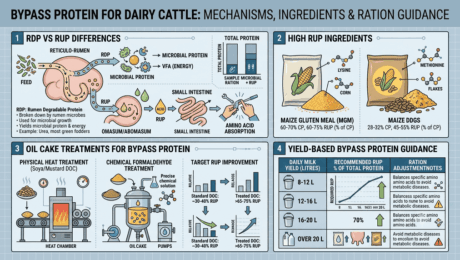
Bypass Protein for Dairy Cattle: What It Is and Which Ingredients Supply It
Quick answer: Bypass protein is protein that a cow’s rumen can’t quite break down, so it carries on to her small intestine and she digests it there herself. You’ll see it written as RUP, which stands for rumen-undegradable protein. Cows milking around 15 litres and above can’t get by on rumen-made protein alone, and that’s
- Published in Uncategorized
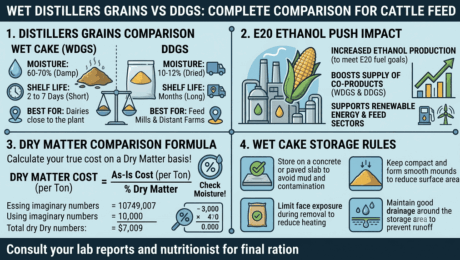
Wet Distillers Grains vs DDGS: Types of Distillers Grains Explained
Quick answer: Wet distillers grains, or wet cake, is the leftover from a grain distillery that nobody bothered to dry. Cheap by the tonne. Trouble is, two thirds of that tonne is water, it starts going off in a few days, and you’re paying freight on the water too. DDGS is the same residue dried
- Published in Uncategorized
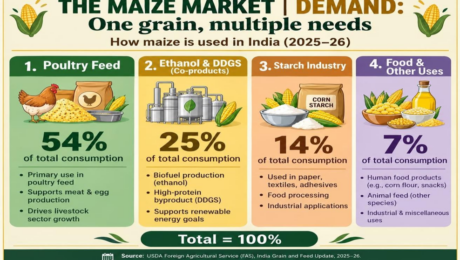
The Maize Price Shock: Can the Animal Feed Industry Absorb the Heat?
Quick Answer: Mills are paying ₹27 to ₹28 a kilo for maize this month, about double what it cost in 2019. Ethanol plants are buying hard; two big southern states planted less, and imports are still tightly capped. The kharif harvest will bring some relief, just not overnight. Every week, at least one mill owner
- Published in Uncategorized
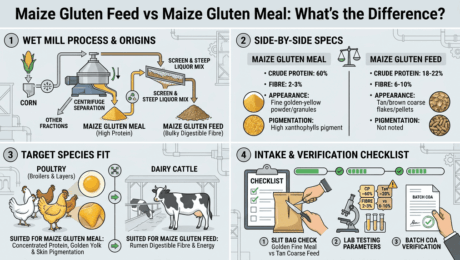
Maize Gluten Feed vs Maize Gluten Meal: What’s the Difference?
Quick answer: Maize gluten meal is the protein one. Roughly 60% CP, golden yellow, and poultry mills buy it partly because it deepens yolk colour. Gluten feed is the bulky, fibrous cousin. It’s bran mixed back with steep water and spent germ, and it usually tests around 18 to 22% protein. Cattle do well on
- Published in Uncategorized
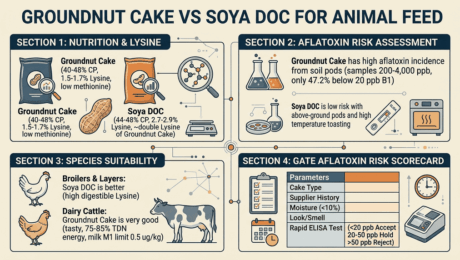
Groundnut Cake vs Soya DOC: Which Protein Source Makes Sense for Your Feed?
Quick answer: For most mills, Soya DOC. It has nearly double the lysine of groundnut cake (around 2.8% against 1.6%) and far less aflatoxin trouble. Groundnut cake isn’t a bad ingredient, though. Protein is about the same, 40 to 48%, and cattle eat it happily. At October 2026 prices it even works out roughly ₹13
- Published in Uncategorized
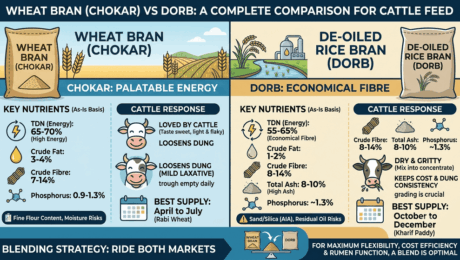
Wheat Bran (Chokar) vs DORB: Which Is Better for Cattle Feed?
Quick answer: Honestly, you’ll probably want both. Protein wise there’s nothing between them (13 to 16% in each), so neither is what you buy for protein. Chokar has more energy, around 65 to 70% TDN against 55 to 65% for DORB, cattle eat it happily, and it loosens the dung a bit. DORB is cheaper
- Published in Uncategorized
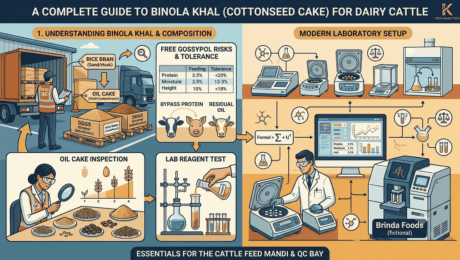
Cottonseed Cake (Binola Khal) for Cattle: Protein, Gossypol and Safe Feeding Limits
Quick answer: For a grown cow or buffalo, binola khal is a perfectly good protein. The undecorticated cake that most mandis in the north sell has somewhere around 20 to 24% crude protein with a lot of fibre in it, and the decorticated kind (made after the hull is removed) can go to 34 to
- Published in Uncategorized
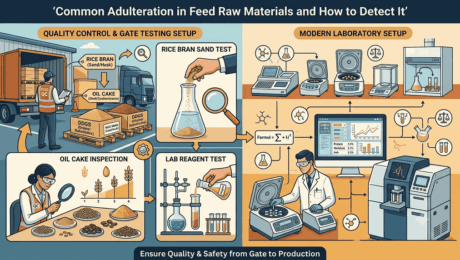
Common Adulteration in Feed Raw Materials and How to Detect It
Quick answer: Sand in rice bran, urea in oil cake, husk in bran and cheap cake mixed into good cake are the four I run into most at Indian feed mill gates. Sand gives itself away through acid insoluble ash (AIA). Urea makes protein look better than it is, and a DMAB or urease test
- Published in Uncategorized
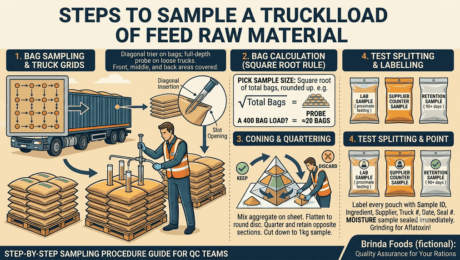
How to Sample a Truckload of Feed Raw Material: A Step-by-Step Sampling Procedure!
Quick answer: Count the bags on the truck. Take the square root. Probe that many bags, picked from all over the load, not just the back. A 400 bag truck? About 20 bags. Tip everything onto one sheet, mix it properly, and cut it down by coning and quartering till you’re left with roughly a
- Published in Uncategorized
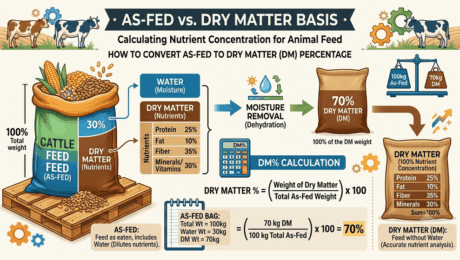
As-Fed vs Dry Matter Basis: How to Convert Feed Nutrient Values (With Examples)
Quick answer: Knock the moisture off 100 to get dry matter. Then divide your as-fed number by that dry matter (as a fraction). DDGS at 10% moisture has 90% DM, so its 27% as-fed protein becomes 27 ÷ 0.90, which is 30% on DM. To come back, multiply by the same 0.90. Say two Soya
- Published in Uncategorized