
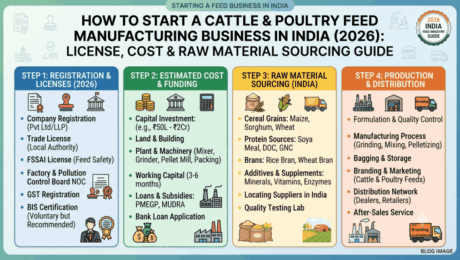
How to Start a Cattle & Poultry Feed Manufacturing Business in India (2026): License, Cost & Raw Material Sourcing Guide
India’s compounded animal feed market is one of the few agri-input categories still growing at 7–9% a year, driven by the world’s largest bovine herd, an expanding organized dairy sector, and poultry integrators pushing feed quality further down the supply chain to contract farmers. That growth is pulling in a steady stream of new entrants
- Published in Uncategorized
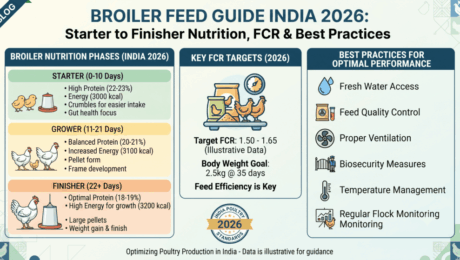
Broiler Feed Guide India 2026: Starter to Finisher Nutrition, FCR & Best Practices
Broiler profitability comes down to one number more than any other: feed conversion ratio. And FCR, in turn, comes down almost entirely to what’s in the feed and how well it’s matched to each growth phase. With raw material costs volatile through 2026 — soybean meal prices up sharply, maize under pressure from ethanol blending
- Published in Uncategorized
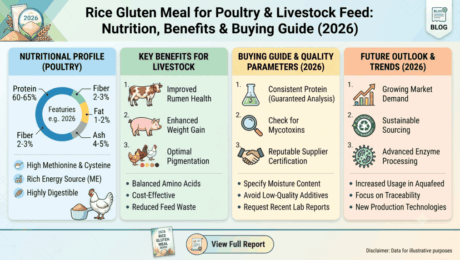
Rice Gluten Meal for Poultry & Livestock Feed: Nutrition, Benefits & Buying Guide (2026)
Rice gluten meal is one of the newer entrants to the Indian feed raw material market, but it’s building a strong case for itself in poultry and livestock formulations. As a by-product of rice wet-milling, it offers a genuinely useful combination of protein, digestibility, and energy — at a time when feed millers are actively
- Published in Uncategorized
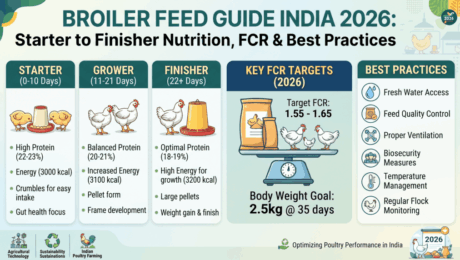
Broiler Feed Guide India 2026: Starter to Finisher Nutrition, FCR & Best Practices
Broiler profitability comes down to one number more than any other: feed conversion ratio. And FCR, in turn, comes down almost entirely to what’s in the feed and how well it’s matched to each growth phase. With raw material costs volatile through 2026 — soybean meal prices up sharply, maize under pressure from ethanol blending
- Published in Uncategorized
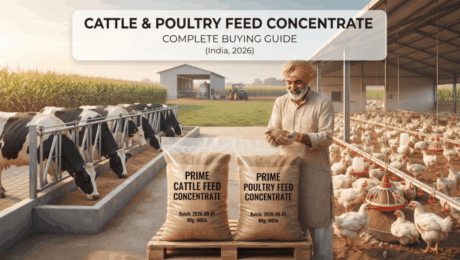
Cattle & Poultry Feed Concentrate: Complete Buying Guide (India, 2026)
“Concentrate,” “compound feed,” and “supplement” get used almost interchangeably in conversations with farmers and even some feed mill staff — and that confusion leads to real formulation and purchasing mistakes. A dairy farmer buying a “concentrate” expecting a complete standalone feed, or a feed mill treating a concentrate premix as a bulk energy ingredient, both
- Published in Uncategorized
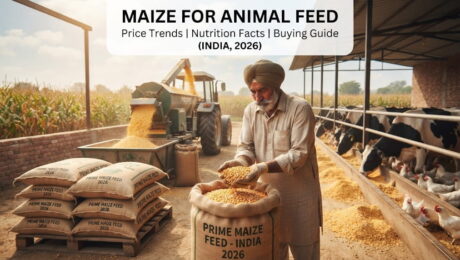
Maize for Animal Feed: Price, Nutrition & Buying Guide (India, September 2026)
Every conversation about feed cost in India eventually comes back to one ingredient: maize. It’s not the most expensive line item in a formulation sheet, and it rarely makes headlines the way soybean meal or DDGS prices do — but it’s the single largest ingredient by weight in most poultry and swine rations, and a
- Published in Uncategorized
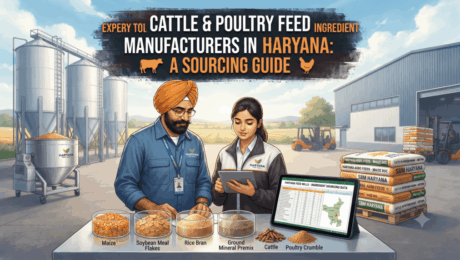
Cattle & Poultry Feed Ingredient Manufacturers in Haryana: A Sourcing Guide
Haryana is one of India’s most established hubs for animal feed raw material manufacturing — a position built on its proximity to major grain and oilseed processing belts, strong rail and road logistics into North India, and a dense cluster of dairy and poultry operations that create steady local demand. If you’re a feed miller,
- Published in Uncategorized
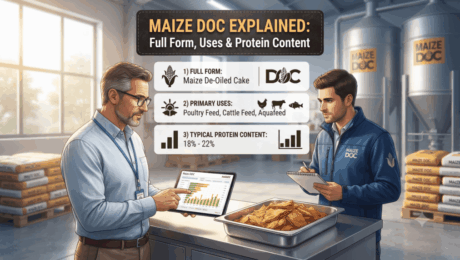
Maize DOC Explained: Full Form, Uses & Protein Content
Maize DOC stands for Maize De-Oiled Cake — the solid residue left behind after oil is extracted from maize (corn) germ or maize kernels. Like soya DOC and mustard DOC, it’s used as a protein and energy source in compound animal feed, though it’s less commonly stocked than its soya and mustard counterparts, which makes
- Published in Uncategorized
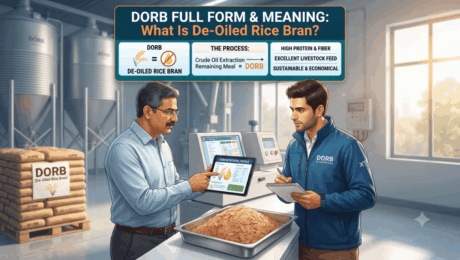
DORB Full Form & Meaning: What Is De-Oiled Rice Bran?
DORB stands for De-Oiled Rice Bran — the fibrous, protein-rich byproduct left over after oil is extracted from rice bran during rice milling. It’s one of the most widely used raw materials in Indian cattle, poultry, and swine feed formulations because it’s affordable, high in fiber and protein, and available in large volumes wherever rice
- Published in Uncategorized
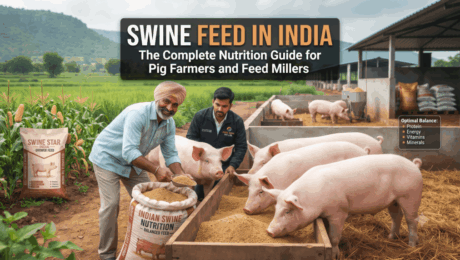
Swine Feed in India: The Complete Nutrition Guide for Pig Farmers and Feed Millers
Pig farming in India runs on tighter margins than most people outside the industry realize. Feed accounts for 65–75% of total production cost—higher than in cattle or poultry—because pigs are single-stomached, fast-growing, and unforgiving of formulation mistakes. Get the phase transitions wrong, and you’re either overpaying for nutrients the pig can’t use yet or underfeeding
- Published in Uncategorized