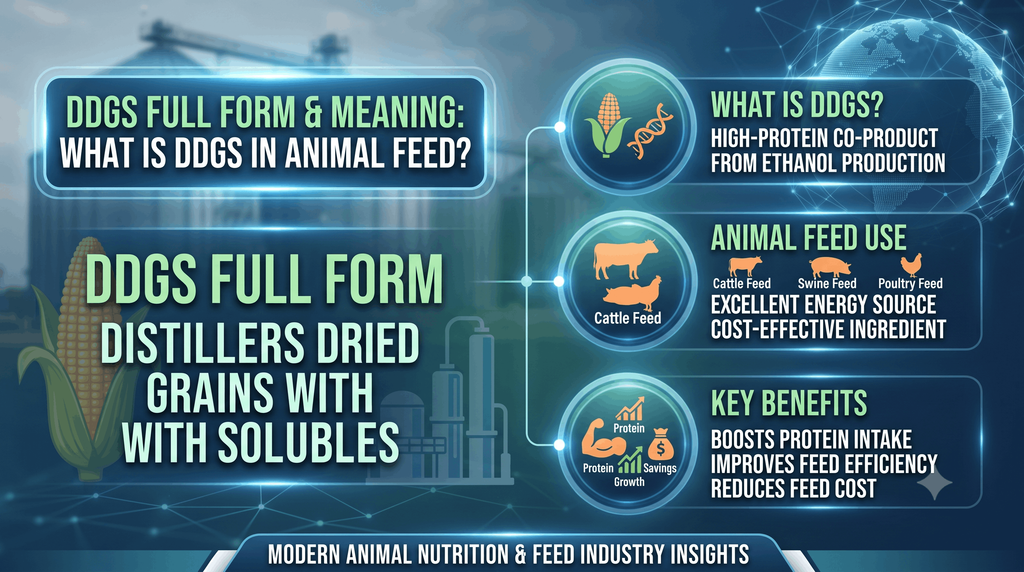
DDGS stands for Distillers Dried Grains with Solubles — a protein- and energy-rich byproduct left over after grain (maize, rice, or other cereals) is fermented to produce ethanol. Once the starch is converted to alcohol, the remaining nutrients — protein, fibre, fat, and minerals — are concentrated, dried, and sold as one of the most widely used raw materials in Indian cattle, dairy, and poultry feed.
If you searched “DDGS full form,” “DDGS meaning,” or “what is DDGS,” this guide answers that directly — plus the practical questions that usually follow: how much protein DDGS actually contains, how it’s used in cattle and poultry rations, and how it’s priced.
DDGS Full Form
DDGS = Distillers Dried Grains with Solubles.
Breaking the acronym down:
- Distillers — the grain has passed through a distillation (ethanol fermentation) process
- Dried — the wet byproduct is dried for stable, long-term storage and transport
- Grains — the base material is cereal grain: maize (corn), rice, or occasionally other grains
- with Solubles — the liquid nutrient fraction (the “solubles”) left over from fermentation is added back into the dried grain fraction, rather than discarded, which is what makes DDGS more nutrient-dense than the dried grain alone
You may also see the shorter form DDG (Dried Distillers Grains, without the solubles fraction added back) or the wet, unprocessed version WDGS. In Indian feed sourcing, “DDGS” is used as an umbrella term, but the two commercially relevant variants are Rice DDGS and Maize DDGS — see our Rice DDGS vs Maize DDGS guide for how to choose between them.
DDGS Meaning: What Does It Actually Mean for a Feed Buyer?
Beyond the acronym, “DDGS” in practical terms means a cost-effective, protein-and-energy raw material that lets a feed miller or dairy operator replace part of the costlier soybean meal or oilseed cake in a ration without giving up nutritional performance. It’s not a single standardised product — quality and nutrient content shift by source grain, distillery process, and supplier — which is why buyers should always request a current certificate of analysis (COA) rather than relying on a generic spec sheet.
Where DDGS Comes From
DDGS is a byproduct, not a primary crop — it only exists because ethanol production needs to happen first:
- Grain (maize or rice) is milled and fermented; enzymes and yeast convert the starch into ethanol.
- The ethanol is distilled off and sold separately (as fuel-grade or industrial alcohol).
- What’s left — the non-fermentable protein, fibre, fat, and minerals, plus the liquid “solubles” fraction — is concentrated and dried.
- The dried material is DDGS: a granular, shelf-stable co-product ready for bulk feed use.
Because it’s a co-product of ethanol manufacturing rather than a crop grown for feed purposes, DDGS supply and pricing track ethanol production volumes and grain availability as much as they track feed demand directly.
DDGS Nutritional Profile
| Component | Typical range | Why it matters |
|---|---|---|
| Crude protein | 26–30% | Core reason DDGS substitutes for soybean meal |
| Crude fat | 8–12% | Meaningful energy contributor alongside protein |
| Crude fibre | Moderate–high | Ruminants tolerate it better than poultry |
| Metabolizable energy | Moderate–high | Supports both protein and energy needs in one ingredient |
| Phosphorus & minerals | Notable | Reduces need for separate mineral supplementation |
Exact figures vary by source grain (rice vs. maize) and by distillery batch — always verify against your supplier’s COA before formulating. See our detailed breakdown in DDGS in Animal Feed: Benefits, Nutritional Value & Uses.
DDGS in Cattle Feed
DDGS is one of the most searched cattle-feed raw materials in India right now — “DDGS cattle feed” search interest has grown roughly 243% year-over-year, reflecting how many dairy and cattle feed operations are actively looking to bring it into their rations. It works as a partial substitute for costlier protein sources (cottonseed cake, soya meal) while also contributing usable energy, which is why it’s commonly blended alongside DORB, Soya DOC, and maize in compound cattle feed. For inclusion-rate guidance, see How Much DDGS Should Go in Dairy Cattle Feed.
DDGS in Poultry Feed
In broiler and layer diets, DDGS is used more conservatively than in cattle feed, since poultry tolerate fibre less well than ruminants do. Even so, “DDGS poultry feed” search interest is up roughly 80% year-over-year, and it’s a genuine tool for feed millers managing rising raw-material costs — typically included at controlled rates as a protein-energy top-up rather than the primary protein source. If you’re sourcing for a poultry feed mill, see our Poultry & Chicken Feed Manufacturers in India guide for the wider raw-material picture.
DDGS Price in India
DDGS pricing moves with ethanol production volumes, grain (maize/rice) availability, and seasonal demand from feed manufacturers — it does not stay static month to month. Rather than quote a single number here that goes stale, see our regularly updated price guides:
- DDGS Price in India (2026) — umbrella pricing overview
- Rice DDGS Price in India (2026)
- Maize DDGS Price in India (2026)
Where to Buy Bulk DDGS in India
Feed mills, dairy operations, and poultry integrators sourcing bulk DDGS should check three things before committing to a supplier: consistent protein and energy values batch to batch (backed by a COA), reliable pan-India logistics, and quality certifications (ISO, HACCP, and similar). Brinda Foods supplies both Rice DDGS and Maize DDGS in bulk across India — see our manufacturers and suppliers guide or request a quote directly for current availability and specifications.
DDGS FAQs
What does DDGS stand for? DDGS stands for Distillers Dried Grains with Solubles, a co-product of ethanol production used in animal feed.
What is the difference between DDGS and DDG? DDG (Dried Distillers Grains) has the liquid “solubles” fraction removed or not added back; DDGS has it reincorporated, making it more nutrient-dense.
Is DDGS the same as maize or rice? No. DDGS is a processed byproduct of grain that has already been fermented for ethanol — it’s not raw maize or rice, though it’s derived from those grains and retains much of their protein, fat, and mineral content.
Is DDGS good for cattle and poultry? Yes, when sourced from a quality-controlled supplier and included at species-appropriate rates. Cattle tolerate higher inclusion levels than poultry due to fibre content.
How is DDGS priced in India? DDGS pricing tracks ethanol production, grain availability, and seasonal demand — see our current DDGS price guide for up-to-date rates.
Where can I buy bulk DDGS in India? Feed manufacturers and dairy producers can source bulk Rice DDGS and Maize DDGS directly from established suppliers like Brinda Foods. Request a quote for current rates and availability.
Sourcing DDGS for your feed mill or dairy operation? Get in touch with Brinda Foods for bulk pricing, current COAs, and pan-India supply.