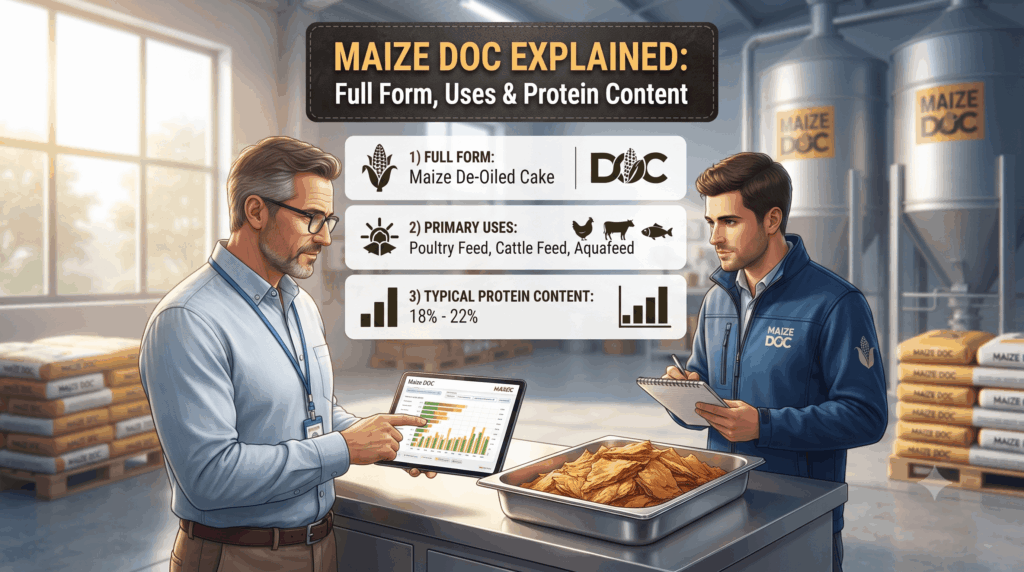
Maize DOC stands for Maize De-Oiled Cake — the solid residue left behind after oil is extracted from maize (corn) germ or maize kernels. Like soya DOC and mustard DOC, it’s used as a protein and energy source in compound animal feed, though it’s less commonly stocked than its soya and mustard counterparts, which makes sourcing it from a reliable supplier especially important.
This guide covers what maize DOC actually is, how it differs from the closely related (and frequently confused) maize DDGS, and where it fits in cattle, poultry, and swine rations.
Maize DOC Full Form
DOC = De-Oiled Cake. Maize DOC, specifically, refers to the de-oiled cake produced from maize germ or maize processing byproducts, after the oil fraction has been mechanically or solvent-extracted.
Maize DOC vs Maize DDGS: What’s the Difference?
This is the question most feed buyers actually need answered, since the two terms get used interchangeably even though they come from different processes:
| Maize DOC | Maize DDGS | |
|---|---|---|
| Source process | Oil extraction from maize germ/kernel | Byproduct of ethanol/starch fermentation |
| Primary use case | Protein and fiber source | Protein, fiber, and energy source |
| Typical protein range | Varies by extraction method and maize fraction used | Typically higher protein density than raw maize |
| Availability in India | Less commonly stocked than DDGS | Well-established supply chain (see our Maize DDGS guide) |
If you’re formulating a ration and unsure which is the better fit, our Maize DDGS vs Soybean Meal comparison and Rice DDGS vs Maize DDGS guide go deeper into how these energy-protein sources stack up in practice. Maize DDGS remains Brinda Foods’ most established maize byproduct — see current specifications and pricing.
Maize DOC Protein Content & Nutritional Value
Protein content in maize DOC depends heavily on which part of the maize kernel was processed and the extraction method used — figures vary meaningfully between suppliers and batches, so always request a certificate of analysis (COA) rather than relying on generic published averages. Beyond protein, maize DOC also contributes:
- Residual oil/energy: generally retains a modest amount of the maize kernel’s natural energy value
- Fiber: contributes to the fiber fraction of compound feed
- Palatability: maize-derived ingredients are generally well accepted across cattle, poultry, and swine diets
Benefits of Maize DOC in Animal Feed
Cattle & dairy feed: Used as a supplementary protein and energy ingredient in compound cattle rations, often alongside DORB and other DOC variants to balance overall ration cost. See our broader cattle feed ingredients and quality standards guide.
Poultry feed: Included at controlled inclusion rates in broiler and layer diets as a supplementary energy-protein source. Explore our broiler feed and layer feed guide for full formulation context.
Swine feed: Maize-derived byproducts are commonly used in swine diets due to good digestibility and palatability. See our swine feed page for details.
Maize DOC vs Soya DOC vs Mustard DOC
Brinda Foods supplies all three major DOC variants used in Indian feed manufacturing, each with a different role:
- Soya DOC — generally the highest-protein DOC variant, widely used as a primary protein source. See benefits of soya DOC in animal feed and current soya DOC pricing.
- Mustard DOC — a strong regional alternative, particularly common in North India where mustard is widely cultivated. See our complete mustard DOC guide.
- Maize DOC — a supplementary protein-energy source, typically used to complement rather than replace soya or mustard DOC in a balanced ration.
Feed millers often blend two or more DOC types with DORB and DDGS to hit target protein and energy specs at the lowest achievable cost per ton — a formulation strategy we cover in Top 5 Feed Raw Materials.
Maize DOC Price Trends
Maize DOC pricing tracks maize processing volumes and seasonal kharif sowing output. For live pricing on the more widely available maize DDGS, see our Maize DDGS price guide; for maize DOC-specific quotes, contact our team directly as pricing is typically negotiated per batch and volume.
FAQs
What is the full form of maize DOC? Maize DOC stands for Maize De-Oiled Cake, the residue left after oil extraction from maize.
Is maize DOC the same as maize DDGS? No. They come from different production processes — DOC comes from oil extraction, DDGS comes from fermentation/ethanol production — and have different nutritional profiles.
What is maize DOC used for? It’s used as a protein and energy ingredient in cattle, poultry, and swine feed formulations, typically alongside other protein sources.
Where can I buy maize DOC in bulk? Request a quote from Brinda Foods for current maize DOC and maize DDGS availability and pricing.
Sourcing maize DOC, DDGS, or DOC blends for your feed mill? Talk to Brinda Foods for specifications and bulk pricing.