Quick answer: Cattle feed in Hindi is पशु आहार. Most people just say पशु चारा though. In the dairy business it gets split into हरा चारा (green fodder), सूखा चारा (dry fodder, mainly भूसा) and दाना, also called बाँटा, which is the grain and खली mix. A 50 kg branded bag was selling for about ₹1,120 to ₹1,380 in October 2026, so roughly ₹22 to ₹28 a kg. GST on cattle feed is nil (HSN 2309). Rates keep moving, so please confirm with your supplier.
Ask ten people in the feed business what “चारा” means and you’ll get at least three answers.
A farmer in Sonipat might mean भूसा. A dealer in Muzaffarnagar might mean the bagged feed on his shelf. And a new buyer calling a supplier for the first time? Could be either. Anyone who has taken orders over the phone in this line of work has run into this at some point.
That’s really why this guide exists. If you buy or sell feed in North India, the Hindi words aren’t just translations. They’re how deals get done.
We’ll go through the terms first. After that, what goes into each kind of feed and where prices stand this month.
What Does “Cattle Feed” Mean in Hindi?
पशु आहार is the textbook answer. पशु चारा is what you’ll hear in the market. Beyond those two, there’s a whole set of words the trade uses every day:
| English | Hindi | Said As | In the Market, This Usually Means |
| Cattle feed | पशु आहार / पशु चारा | pashu aahar / pashu chara | Anything cattle eat |
| Green fodder | हरा चारा | hara chara | बरसीम, ज्वार, नेपियर, green मक्का |
| Dry fodder | सूखा चारा | sookha chara | भूसा, पुआल, कड़बी |
| Concentrate | दाना / बाँटा | dana / baanta | The grain and खली mix |
| Oilcake | खली | khali | Soya DOC, Mustard DOC |
| Bran | चोकर | chokar | DORB, if it’s de-oiled rice bran |
| Maize | मक्का | makka | Energy grain |
| Mineral mixture | खनिज मिश्रण | khanij mishran | Small daily dose |
| Silage | साइलेज | silage | Fermented green fodder |
| Compound feed | मिश्रित पशु आहार | mishrit pashu aahar | Branded bag |
One small tip from experience in the trade. If somebody says दाना, you can be fairly sure they mean concentrate. If they say चारा, ask.
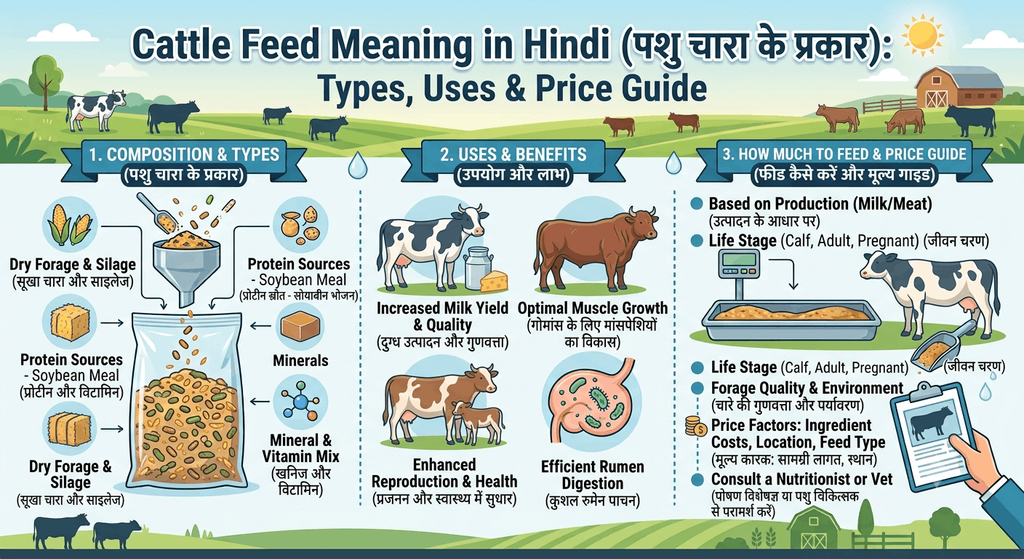
पशु चारा के प्रकार: Types of Cattle Feed
1. हरा चारा (Green Fodder)
Winter means बरसीम almost everywhere in the north. Once it warms up, it’s ज्वार and बाजरा, sometimes maize cut green. Many dairies also keep नेपियर घास growing year round, since it just keeps coming back.
Hardly any of this passes through a feed mill. It’s grown at home or bought close by.
2. सूखा चारा (Dry Fodder)
Go to any village in Haryana after the wheat harvest and you’ll see भूसा stacked everywhere. It’s the main dry fodder in Punjab, Haryana and UP by a long way. Paddy straw (पुआल) is used too, and in drier areas कड़बी, which is dried jowar or bajra stalk.
The thing about dry fodder is that it fills the animal up but doesn’t carry much protein or energy. Somebody has to make up for that. Which brings us to दाना.
3. दाना / बाँटा (Concentrate Feed)
This is our side of the business.
दाना is usually some maize or DDGS, a share of खली, and चोकर to round it out. DORB is a common pick for that last part because it’s cheap and adds fibre. Smaller farmers still mix it by hand at home. Larger dairies and feed mills buy each item separately by the truckload and blend to their own formula.
4. खनिज मिश्रण (Mineral Mixture)
A few grams a day of calcium, phosphorus and trace minerals. Expensive per kilo, sure. But the quantity is so small that most buyers hardly notice it in the monthly bill.
5. साइलेज (Silage)
Green maize, chopped, pressed down hard and sealed so no air gets in. It ferments and keeps for months. Over the last few years a lot more commercial dairies in Punjab and Haryana have started making it, mostly so they’re not stuck when green fodder dries up.
6. मिश्रित पशु आहार (Compound Cattle Feed)
The bag you buy off the shelf, as pellets or mash. BIS covers it under IS 2052, which has a Type I and a Type II grade. If you’ve seen “BIS Type-1” on a bag, that’s what it refers to.
Quick Read : Cattle Feed Price in India
Quick Read : DDGS Full Form & Meaning
Quick Read : Soya DOC Price in India
Quick Read : Mustard DOC Price in India
Quick Read : DORB Price in India
What’s Inside a Bag of दाना?
Feed mills don’t order “दाना.” They order maize, खली, DDGS, chokar. Here’s how the names match up, with rough rates from this October:
| Raw Material | What It’s Called Locally | Why It’s There | Approx. Rate (Oct 2026) |
| Maize | मक्का | Energy | ₹22 to ₹26/kg |
| Soya DOC | सोयाबीन खली | Protein | ₹40 to ₹52/kg |
| Mustard DOC | सरसों खली | Protein, cheaper | ₹20 to ₹27/kg |
| DORB | चावल का चोकर (डी-ऑयल्ड) | Fibre, lowers cost | ₹9 to ₹15/kg |
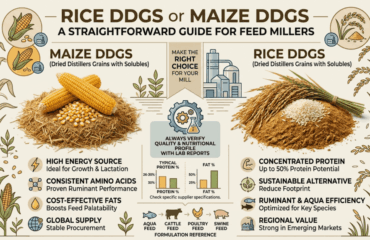
| Maize DDGS | मक्का DDGS | Energy plus protein | ₹12.5 to ₹15.5/kg |
| Rice DDGS | चावल DDGS | Higher protein | ₹22 to ₹29/kg |
Honestly, these can change within a week. Crop arrivals, ethanol plant output, demand, all of it pushes rates around. Get a fresh quote and a COA before locking your formula.
If you want every ingredient price on one page, we keep a raw material price comparison updated.
How Each Feed Type Gets Used?
Fodder comes first. Always. Green or dry, it’s the base of the ration.
दाना goes on top to cover what fodder can’t. And within दाना, protein is where the money goes, so खली is the ingredient formulators think about most. It’s also a big reason DDGS caught on so fast in India. You get energy and a fair bit of protein from one ingredient, so part of the costly खली can come out.
DORB is there for fibre at a low price. Minerals fill in the small stuff. Silage is basically insurance for the lean months.
As for exact amounts, no two mills do it the same way. It depends on the animals, what fodder is around, and what prices look like that week. Our cattle feed formulation and ration-balancing guide goes into it properly. There’s also a separate piece on how much DDGS should go in dairy cattle feed.
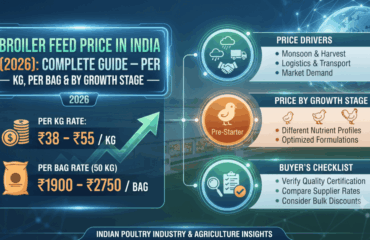
Cattle Feed Price Guide!
Branded Bags Right Now
| Brand / Product | Bag | Bag Price | Per Kg |
| Godrej Bypro Cattle Feed | 50 kg | ₹1,380 | ₹27.6 |
| Godrej Milk More Cattle Feed | 50 kg | ₹1,200 | ₹24.0 |
| Amul Nutri Rich (BIS Type-1) | 50 kg | ₹1,180 | ₹23.6 |
| Godrej Super Cattle Feed | 50 kg | ₹1,120 | ₹22.4 |
Note: Taken from IndiaMART and TradeIndia listings in October 2026. Your dealer may quote a bit higher or lower.
- What About भूसा and हरा चारा?
We’ve left these out on purpose. There’s no sensible all-India rate for fodder. भूसा is cheap for a while after wheat is cut and then slowly gets dearer until the next harvest. Two districts next to each other can have very different prices. Your local mandi is the best source here.
- Why Some दाना Costs More?
A lot of it is the protein. Soya DOC can be almost double the price of Mustard DOC, so whichever one a manufacturer leans on shows up clearly in the bag price.
Branding adds its own layer. Processing, packing, trucks, dealer margin, company margin. It all sits on top.
And location plays a part. Mills near the supply belt pay less on freight. Buy during the monsoon and you’re dealing with moisture risk. Buy spot instead of on contract and you’ll usually pay more.
This is exactly why dairies with steady volume have been shifting to buying raw materials directly and mixing on their own. We’ve put together some ideas on how to reduce animal feed cost in India if that’s something you’re looking at.
- GST and HSN Code
Easy one. Cattle feed is under HSN 2309 and the GST rate is nil.
Supplements are a different story. Mineral mixtures and additives billed separately often don’t qualify and can be charged 18%. Worth checking your invoices. Full details are in our Cattle Feed HSN Code & GST Rate guide.
Choosing a Raw Material Supplier!
Whatever you call it, खली or DDGS or चोकर, the supplier matters more than people think.
Ask for a COA with each lot. Protein, moisture, aflatoxin. If you’re buying DORB or खली, look at sand and silica as well, because that’s usually where trouble hides.
Certifications help too (ISO 9001:2015, BIS, GMP, GAFTA, FOSFA). So does asking how they store stock. In the monsoon, a supplier who follows FIFO properly can save you a lot of headaches. And of course, can they actually deliver on the date they promise?
We’ve written a longer checklist on cattle feed ingredients and quality standards.
Frequently Asked Questions
- What do you call cattle feed in Hindi?
पशु आहार. In everyday talk it’s mostly पशु चारा. The concentrate part is दाना, or बाँटा in some regions.
- Are चारा and दाना the same thing?
No, though people mix them up all the time. चारा is fodder, green or dry. दाना is the concentrate made with grain, खली and चोकर.
- What are the types of cattle feed (पशु चारा के प्रकार)?
हरा चारा, सूखा चारा, दाना, खनिज मिश्रण, साइलेज and the ready-made मिश्रित पशु आहार.
- What is खली?
The leftover part of oilseeds after the oil is taken out. Soybean खली is sold as Soya DOC, mustard खली as Mustard DOC. Both go into feed for protein.
- What’s the cattle feed price per kg?
For branded bags, around ₹22 to ₹28 a kg at the moment. Buying raw materials in bulk and mixing yourself usually brings that down.
- Is there GST on cattle feed?
Nil, under HSN 2309. Supplements billed on their own can carry 18%.
- Where can I buy these raw materials in bulk?
We supply Maize, Soya DOC, Mustard DOC, DORB, Maize DDGS and Rice DDGS from Panipat to feed manufacturers across Punjab, Haryana, UP and other states. Quote details are right below.
About Brinda Foods
Brinda Foods is a family business from Panipat, Haryana. We’ve been in animal feed raw materials since 1987, supplying Maize, Soya DOC, Mustard DOC, DORB, Maize DDGS and Rice DDGS in bulk to feed manufacturers and dairies around the country. We’re ISO 9001:2015 certified.
Looking for today’s rate? Send an enquiry or talk to our team.
Meta Description:
Cattle feed in Hindi is पशु आहार or पशु चारा. Here’s what हरा चारा, सूखा चारा, दाना and खली really mean in the trade, how they’re used, and what they cost today.